
Short answer
Partly. The parts of the Dr. Sebi diet that match mainstream nutrition science hold up: eating mostly whole plants and cutting ultra-processed food is linked with better health in large studies and trials. The signature claims do not: food cannot meaningfully change your blood pH, no trial has tested the diet itself, and there is no evidence it or his herbs cure any disease. A strict version also needs a B12 source and careful planning for protein, iron and iodine.
Key takeaways
- No clinical trial has ever tested the Dr. Sebi diet as a whole. Everything below is borrowed from research on related ideas: alkaline diets, plant-based diets and ultra-processed food.
- Your blood pH is held in a tight range by your kidneys and lungs. Food changes urine pH, not blood pH, and systematic reviews found no evidence that an alkaline diet protects bones or prevents cancer. [1] [2] [3]
- The good part is real: diets built on fruit, vegetables, whole grains, nuts and legumes are linked with lower heart disease and mortality, and an NIH trial found people ate about 500 more calories a day on ultra-processed food. [4] [5] [6]
- A strict plant-only plan carries known gaps. Reviews report high rates of B12 depletion in vegans, lower iron stores in vegetarians and lower protein and iodine intakes. [7] [8] [9]
- In New York, Dr. Sebi was charged in 1987 with practicing medicine without a license and acquitted by a jury in 1988. A separate civil consumer-fraud case ended with an agreement barring him from making therapeutic claims for his products.
- Kidney disease, pregnancy, diabetes medication and a history of eating disorders are all reasons to plan any restrictive diet with a clinician first.
You've seen the videos: a smiling guy in a kitchen holding a burro banana, a key lime and a bag of sea moss, telling you everything else is 'acidic' and 'dead'. Maybe your aunt swears by it. Maybe your gym buddy dropped a pant size on it. And maybe your doctor rolled her eyes.
So who's right? Annoyingly, a bit of everyone. The Dr. Sebi diet contains one genuinely good idea (eat lots of whole plants, ditch the junk) wrapped inside a theory that doesn't survive contact with a physiology textbook (yes, really). This guide separates the two, with the actual studies, so you can keep the good part and skip the nonsense.
Full disclosure: we run a shop called The Electric Eats, and plenty of our customers found us through this community. We respect that. We also think respect means telling you the truth, including the bits nobody puts in a TikTok caption.
Who was Dr. Sebi?
Dr. Sebi was the name used by Alfredo Darrington Bowman, born on 26 November 1933 in Ilanga, Honduras. He was a self-taught herbalist, not a licensed physician, and 'Dr.' was a title he adopted rather than a medical degree.
He built a following in New York in the 1980s and later ran a healing village in Honduras linked to his USHA Research Institute. His audience kept growing after his death, much of it through social media, and today 'Dr. Sebi approved' is a whole shopping category.
For many followers, especially in Black communities, his message landed for reasons that go beyond food. He talked about African heritage, distrust of a medical system that has earned some distrust, and taking health back into your own kitchen. You don't have to buy his biology to understand why that resonated. (Hey, the Tuskegee study was real.)
You can respect why a message resonated and still check whether its science holds up. Those are two different questions.
What the Dr. Sebi diet claims
Here's the theory in plain English, described as fairly as we can. Dr. Sebi taught that disease grows in the body when mucus builds up and the body becomes acidic. Eat the right 'electric' foods, he said, and you restore an alkaline state where illness can't take hold.
- Eat only from the approved list. His nutritional guide names specific vegetables, fruits, grains, nuts, oils, spices and teas. Everything else is out.
- No animal foods at all. No meat, fish, eggs or dairy.
- No 'hybrid' foods. Seedless fruit, regular wheat, white rice, soy and many common vegetables are excluded because he considered them man-made and acidic.
- Nothing processed. No added sugar, alcohol, canned or packaged foods.
- Drink about a gallon of water a day and use his herbal products, often sold as 'cell food' or cleansing packages.
The approved herbs carry a lot of the theory's weight. They are presented as cleansing the body at a cellular level and supplying minerals like iron that 'electric' cells supposedly need. If you want the full food list with our honest notes, it lives in our electric foods list.
The pH problem: why food can't make your blood alkaline
This is the load-bearing wall of the whole theory, so let's be careful. Your blood sits at a pH of roughly 7.35 to 7.45, and your body defends that range like a bouncer at a velvet rope. Kidneys and lungs adjust bicarbonate and carbon dioxide minute by minute to keep it there. [1]
If your blood pH actually swung the way alkaline-diet marketing implies, you wouldn't feel energized. You'd be in an emergency room. (Hint: that's what metabolic acidosis is.) Diet can nudge the acid load your kidneys process, and in chronic kidney disease, where the kidneys struggle to excrete acid, that load genuinely matters. [10] That's a kidney-patient issue managed by a nephrologist, not a reason for healthy people to chase alkaline food.
What food clearly does change is urine. In more than 22,000 adults in the EPIC-Norfolk study, more fruit and vegetables and less meat went with more alkaline urine. [11] In a small trial, a week of strict vegan eating raised 24-hour urine pH by about half a unit, while two or three vegan days a week did not. [12] That's your kidneys doing their job, flushing the difference. It is not your blood turning alkaline.
What the alkaline research found (spoiler: not much)
Researchers took the alkaline idea seriously enough to test it, mostly on bones and cancer, the two places it was supposed to matter most.
- Bones. The acid-ash theory said acidic diets leach calcium from your skeleton. A meta-analysis of high-quality calcium balance studies found more urine calcium with a higher acid load but no change in actual calcium balance or bone breakdown markers. [13] A larger systematic review of 55 studies concluded there was no evidence an alkaline diet protects bone health. [2] The lead author later put it bluntly in a published letter titled 'Evidence does not support the alkaline diet'. [14]
- Cancer. A systematic review screened 8,278 citations on dietary acid load, alkaline water and cancer. Exactly one study qualified, and it found no association with bladder cancer. No trials have tested an alkaline diet as cancer treatment. [3]
- The friendly review. Even a 2012 review that was open to the idea concluded only that alkaline diets may have some value and that further studies are warranted. That is a long way from a cure. [15]
Notice the pattern? Where alkaline eating looks good, it's because the foods are fruits and vegetables, not because of pH.
What is genuinely reasonable about it
Now the good news, and it's legitimately good. Strip away the pH talk and the Dr. Sebi diet tells you to eat a pile of fruit, vegetables, whole grains, nuts and seeds, and to quit fast food, soda, candy and alcohol. Every mainstream dietitian on earth would sign that part. (Your doctor might even stop rolling her eyes.)
The evidence for that core is strong by nutrition standards:
- A meta-analysis of 95 studies found that each extra 200 g a day of fruit and vegetables went with 10% lower all-cause mortality, with benefits for heart disease and stroke. [4]
- Pooled data from two big US cohorts plus 24 other studies found the lowest mortality at about five servings a day, with little extra benefit beyond that. [16]
- In more than 200,000 US adults, a plant-based diet built from healthy plant foods went with 25% lower coronary heart disease risk, while a plant-based diet heavy in refined grains, juice and sweets went with 32% higher risk. [5] That second number matters: 'plant-based' alone isn't magic. Vegan donuts are still donuts.
- In an NIH inpatient trial, 20 adults ate about 508 more calories a day and gained around 0.9 kg in two weeks on an ultra-processed diet, then lost about that much on an unprocessed diet. [6]
So if someone tells you they feel better and lost weight on Dr. Sebi, believe them. They probably did. They swapped chips and soda for mangoes and quinoa and drank a lot of water. The mechanism is boring nutrition, not electricity. (Sorry.)
People often feel better on this diet. The reason is real food, not alkaline blood.
What has no evidence behind it
Here's where we have to be straight with you, even though we sell herbs to many of the same people.
| Claim | What the evidence shows |
|---|---|
| Food makes your blood alkaline | No. Blood pH is tightly regulated; food mostly shows up in urine pH. [1] [11] |
| An alkaline body cannot get sick | No supporting trials; the cancer review found essentially no usable evidence. [3] |
| Mucus is the root of all disease | Not a concept used in physiology or supported by any study we could find. |
| Hybrid foods are acidic or harmful | No evidence. Many approved foods are themselves bred cultivars or hybrids (spelt and key limes, for example). |
| Approved herbs clean cells or cure disease | No human trials test this. Individual herbs have their own, much narrower research files. |
| The diet reverses diabetes, HIV, cancer or herpes | No evidence. No herb or diet cures these, and stopping treatment is dangerous. |
One more thing to say plainly: his 1980s ads claimed his remedies could cure AIDS. No herb or diet cures HIV, and antiretroviral treatment is what keeps people with HIV healthy. If you live with HIV, diabetes or cancer, a plant-heavy diet can sit alongside your treatment. It is not a replacement for it.

The nutrient gaps a strict version creates
Any diet that cuts out every animal food needs a plan. That's not an anti-vegan opinion, it's arithmetic.
- Vitamin B12. Plants don't reliably provide it. A review of 18 studies using sensitive blood markers found B12 depletion or deficiency in 11% to 90% of older vegetarians and up to 86% of children, higher in vegans, and recommended regular B12 supplements. [7] Sea moss and spirulina are not reliable sources.
- Iron. A meta-analysis of 24 studies found adult vegetarians had serum ferritin about 30 µg/L lower than meat eaters. [8] Herbal teas with meals make this worse: chamomile cut iron absorption from a meal by 47% and lime flower (tila, a Sebi-approved tea) by 52% in one study. [17]
- Protein, calcium, iodine and zinc. A systematic review of 48 studies found European vegans ate less protein than any other diet group and had low intakes of B12, calcium, iodine, zinc and selenium. [9] The approved list drops lentils, black beans, tofu and peanuts, keeping chickpeas, which makes protein harder still.
- Iodine and seaweed. Seaweed can swing iodine too high as well as too low. A thyroid review warned that even small amounts of brown seaweeds (kelp, bladderwrack) can upset thyroid function and that labels are often inadequate. [18] Sea moss is a red seaweed with far less data, so you have no reliable way to know how much iodine a spoonful carries.
The fix is not complicated: a B12 supplement, iron-aware meal planning, a protein target, and a blood test every year or so. Our electric foods list has a practical version.
The legal history, stated plainly
This part gets told two ways online: as proof he was a fraud, or as proof he was persecuted. Here are the facts as public reporting and court summaries describe them, with no spin either way.
| Year | What happened |
|---|---|
| 1987 | After newspaper ads claimed his remedies could cure AIDS and other diseases, the New York State Attorney General charged him with practicing medicine without a license. |
| 1988 | A jury acquitted him. Reports say the state could not show he had made a medical diagnosis. |
| 1988 | In a separate civil consumer-fraud case brought by the New York Attorney General, he agreed to stop making therapeutic claims for his products and paid $900. |
| May 2016 | Honduran authorities detained him at the airport on Roatán with tens of thousands of US dollars in cash and charged him with money laundering. |
| August 2016 | He became ill with pneumonia while in custody and died on 6 August 2016, aged 82. |
Two things are true at once. He won the criminal case, and he agreed in the civil case to stop claiming his products treated disease. Followers point to the first; critics to the second. Neither tells you whether the diet's science works. Only studies can do that, and we've covered those above.
So, should you try it? A decision rule
Our opinion, labeled as opinion: keep the spirit, ditch the dogma. Here's how that looks in practice.
- Keep the plant base. Fill most of your plate with vegetables, fruit, whole grains, nuts and seeds. That's the evidence-backed part. [4]
- Keep the junk ban. Cutting ultra-processed food is the single biggest win in the whole program. [6]
- Add back the beans. Lentils, black beans and tofu make protein and iron far easier. No study shows they're harmful.
- Take B12. Non-negotiable if you go fully plant-based. [7]
- Move your tea away from meals. Drink herbal tea an hour or more before or after iron-rich meals. [17]
- Throw out the pH strips. Judge the diet by energy, blood work and how your clothes fit.
- Never drop medication because of a diet. Talk to the person who prescribed it.
A sample day that keeps the good part
| Meal | What it looks like | Why |
|---|---|---|
| Breakfast | Quinoa or spelt porridge with berries, walnuts and hemp seeds | Whole grain, fruit and a real protein and omega-3 boost |
| Mid-morning | A cup of herbal tea, well away from meals | Keeps tea polyphenols from blocking iron at lunch [17] |
| Lunch | Big salad of greens, chickpeas, avocado, tomato, cucumber and olive oil, plus a squeeze of lime | Fiber, healthy fat, and vitamin C to help iron absorption |
| Snack | An apple or mango and a handful of Brazil nuts | Fruit plus selenium; two or three nuts is plenty |
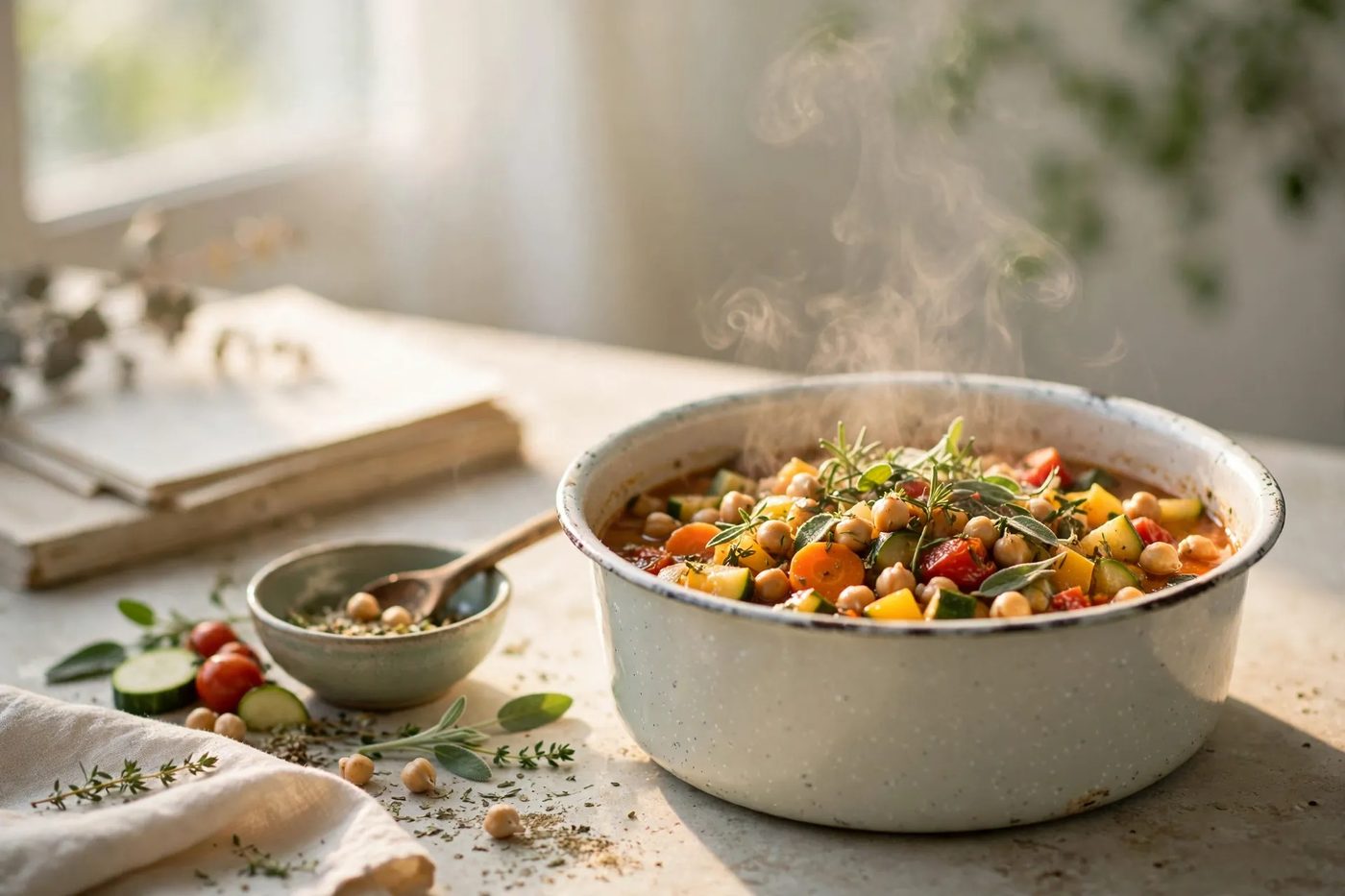
| Dinner | Lentil and vegetable stew with wild rice (lentils are off the strict list, but on ours) | Easy protein and iron |
| Daily | A B12 supplement | The one thing plants cannot supply reliably [7] |
Nothing about that day is extreme. It is close to what dietitians already recommend, with the Sebi community's love of whole plants and its hostility to junk food left fully intact. That's the version we think is worth keeping.
Who should not try a strict version without a clinician
- Kidney disease. When kidneys can't clear potassium well, a sudden jump in high-potassium fruit plus herbal products can push blood potassium too high, and supplements are an under-recognized cause of it. [19] Kidney experts now favor individual advice over blanket food rules, which is exactly why this needs your nephrology team. [20]
- Pregnancy and breastfeeding. B12, iron, iodine and protein needs go up, and deficits affect the baby.
- Diabetes on insulin or sulfonylureas. A sudden diet change can drop blood sugar fast. Your doses may need adjusting.
- Children and teens. Growing bodies need a properly planned diet, not a restrictive list.
- Anyone with a history of disordered eating. Strict 'clean' and 'dirty' food rules can feed it.
- Anyone on prescription medication. Herbs in cleansing packages can interact with drugs; ask a pharmacist.
Where herbs fit, honestly
Herbal teas can be a lovely part of a plant-heavy life. Several traditional plants have real research files, and many have long histories of use. But a tea is a tea: traditionally used to support things like digestion or relaxation, not a cellular cleanse.
Our Bowel Balance blend is a gentle daily digestive tea, and Scales of Balance is an evening cup with valerian and lemon balm. Neither treats anything, and we'll never pretend otherwise. If you're shopping for 'Sebi herbs', read our guide to buying them safely first, and our beginner's guide if you're new to brewing.
 Bowel BalanceGentle Daily Digestive Support$28.50 · 2oz
 Scales of BalanceNervous System Calm + Sleep Support$28.50 · 2oz

Frequently asked questions
Is the Dr. Sebi diet backed by science?
Only the parts that overlap with mainstream nutrition. Eating mostly whole plants and avoiding ultra-processed food is well supported. The alkaline-blood theory, the mucus theory and claims that the diet or his herbs cure disease are not, and the diet itself has never been tested in a trial.
Who was Dr. Sebi?
Dr. Sebi was Alfredo Bowman (1933 to 2016), a self-taught herbalist from Honduras who was not a licensed physician. He promoted an alkaline, plant-only diet and herbal products from New York and later a retreat in Honduras.
Can food make your blood alkaline?
No. Your kidneys and lungs keep blood pH between about 7.35 and 7.45. Diet changes urine pH, which is why pH strips move, but it does not meaningfully change blood pH in healthy people.
Why do people lose weight on the Dr. Sebi diet?
Mostly because it removes ultra-processed food, sugar and alcohol and replaces them with fruit, vegetables and whole grains. An NIH trial found people ate about 500 more calories a day on ultra-processed food than on unprocessed food.
Is the Dr. Sebi diet safe?
A well-planned plant-heavy diet is safe for most healthy adults. A strict version needs a B12 supplement and attention to protein, iron, iodine and calcium. People with kidney disease, pregnancy, diabetes medication or a history of eating disorders should involve a clinician.
Was Dr. Sebi convicted?
No. He was acquitted in 1988 of practicing medicine without a license in New York. Separately, a 1988 civil consumer-fraud case ended with him agreeing to stop making therapeutic claims for his products and paying $900.
Do Dr. Sebi herbs cure disease?
No. There are no human trials showing his herbs or products cure any disease. Some individual herbs have narrow research on specific outcomes, which is a very different thing.
References
- Hamm LL, Nakhoul N, Hering-Smith KS (2015). Acid-Base Homeostasis. Clin J Am Soc Nephrol. PubMed 26597304 · DOI
- Fenton TR, Tough SC, Lyon AW, Eliasziw M, Hanley DA, et al. (2011). Causal assessment of dietary acid load and bone disease: a systematic review & meta-analysis applying Hill's epidemiologic criteria for causality. Nutr J. PubMed 21529374 · DOI
- Fenton TR, Huang T (2016). Systematic review of the association between dietary acid load, alkaline water and cancer. BMJ Open. PubMed 27297008 · DOI
- Aune D, Giovannucci E, Boffetta P, Fadnes LT, Keum N, Norat T, et al. (2017). Fruit and vegetable intake and the risk of cardiovascular disease, total cancer and all-cause mortality-a systematic review and dose-response meta-analysis of prospective studies. Int J Epidemiol. PubMed 28338764 · DOI
- Satija A, Bhupathiraju SN, Spiegelman D, Chiuve SE, Manson JE, Willett W, et al. (2017). Healthful and Unhealthful Plant-Based Diets and the Risk of Coronary Heart Disease in U.S. Adults. J Am Coll Cardiol. PubMed 28728684 · DOI
- Hall KD, Ayuketah A, Brychta R, Cai H, Cassimatis T, Chen KY, et al. (2019). Ultra-Processed Diets Cause Excess Calorie Intake and Weight Gain: An Inpatient Randomized Controlled Trial of Ad Libitum Food Intake. Cell Metab. PubMed 31105044 · DOI
- Pawlak R, Parrott SJ, Raj S, Cullum-Dugan D, Lucus D, et al. (2013). How prevalent is vitamin B(12) deficiency among vegetarians?. Nutr Rev. PubMed 23356638 · DOI
- Haider LM, Schwingshackl L, Hoffmann G, Ekmekcioglu C, et al. (2018). The effect of vegetarian diets on iron status in adults: A systematic review and meta-analysis. Crit Rev Food Sci Nutr. PubMed 27880062 · DOI
- Bakaloudi DR, Halloran A, Rippin HL, Oikonomidou AC, Dardavesis TI, Williams J, et al. (2021). Intake and adequacy of the vegan diet. A systematic review of the evidence. Clin Nutr. PubMed 33341313 · DOI
- Nagami GT, Kraut JA (2022). Regulation of Acid-Base Balance in Patients With Chronic Kidney Disease. Adv Chronic Kidney Dis. PubMed 36175071 · DOI
- Welch AA, Mulligan A, Bingham SA, Khaw KT, et al. (2008). Urine pH is an indicator of dietary acid-base load, fruit and vegetables and meat intakes: results from the European Prospective Investigation into Cancer and Nutrition (EPIC)-Norfolk population study. Br J Nutr. PubMed 18042305 · DOI
- Cosgrove K, Johnston CS (2017). Examining the Impact of Adherence to a Vegan Diet on Acid-Base Balance in Healthy Adults. Plant Foods Hum Nutr. PubMed 28677099 · DOI
- Fenton TR, Lyon AW, Eliasziw M, Tough SC, Hanley DA, et al. (2009). Meta-analysis of the effect of the acid-ash hypothesis of osteoporosis on calcium balance. J Bone Miner Res. PubMed 19419322 · DOI
- Fenton TR, Fenton CJ (2016). Evidence does not support the alkaline diet. Osteoporos Int. PubMed 26856582 · DOI
- Schwalfenberg GK (2012). The alkaline diet: is there evidence that an alkaline pH diet benefits health?. J Environ Public Health. PubMed 22013455 · DOI
- Wang DD, Li Y, Bhupathiraju SN, Rosner BA, Sun Q, Giovannucci EL, et al. (2021). Fruit and Vegetable Intake and Mortality: Results From 2 Prospective Cohort Studies of US Men and Women and a Meta-Analysis of 26 Cohort Studies. Circulation. PubMed 33641343 · DOI
- Hurrell RF, Reddy M, Cook JD (1999). Inhibition of non-haem iron absorption in man by polyphenolic-containing beverages. Br J Nutr. PubMed 10999016
- Smyth PPA (2021). Iodine, Seaweed, and the Thyroid. Eur Thyroid J. PubMed 33981614 · DOI
- Batra V, Villgran V (2016). Hyperkalemia from Dietary Supplements. Cureus. PubMed 27924248 · DOI
- Clase CM, Carrero JJ, Ellison DH, Grams ME, Hemmelgarn BR, Jardine MJ, et al. (2020). Potassium homeostasis and management of dyskalemia in kidney diseases: conclusions from a Kidney Disease: Improving Global Outcomes (KDIGO) Controversies Conference. Kidney Int. PubMed 31706619 · DOI
Regulatory and institutional sources
- NIH Office of Dietary Supplements. Vitamin B12: Fact Sheet for Health Professionals. ods.od.nih.gov/factsheets/VitaminB12-HealthProfessional/
- NIH Office of Dietary Supplements. Iron: Fact Sheet for Health Professionals. ods.od.nih.gov/factsheets/Iron-HealthProfessional/
- New York Amsterdam News (2016). Dr. Sebi dies in custody of Honduran jailers. amsterdamnews.com/news/2016/08/11/dr-sebi-dies-custody-honduran-jailer
- PolitiFact (2023). 'Dr. Sebi,' promoter of controversial diets, died from pneumonia. He was not killed. www.politifact.com/factchecks/2023/may/25/facebook-posts/dr-sebi-promo
- McGill Office for Science and Society (2019). 'Dr.' Sebi: What Do We Make of this Non-Doctor?. www.mcgill.ca/oss/article/quackery/dr-sebi-what-do-we-make-him
- La Prensa (Honduras) (2016). Fiscalía acusa al doctor Sebi por lavado de activos. www.laprensa.hn/sucesos/fiscalia-acusa-al-doctor-sebi-por-lavado-de-ac