Buyer's guides · Chuchuhuasi
Where to Buy Chuchuhuasi Bark: A Buyer's Guide
How to buy real chuchuhuasi (Maytenus) bark in the USA: why the botanical name matters, what the research shows, how to read a label, and where to buy wild-harvested bark.
Short answer
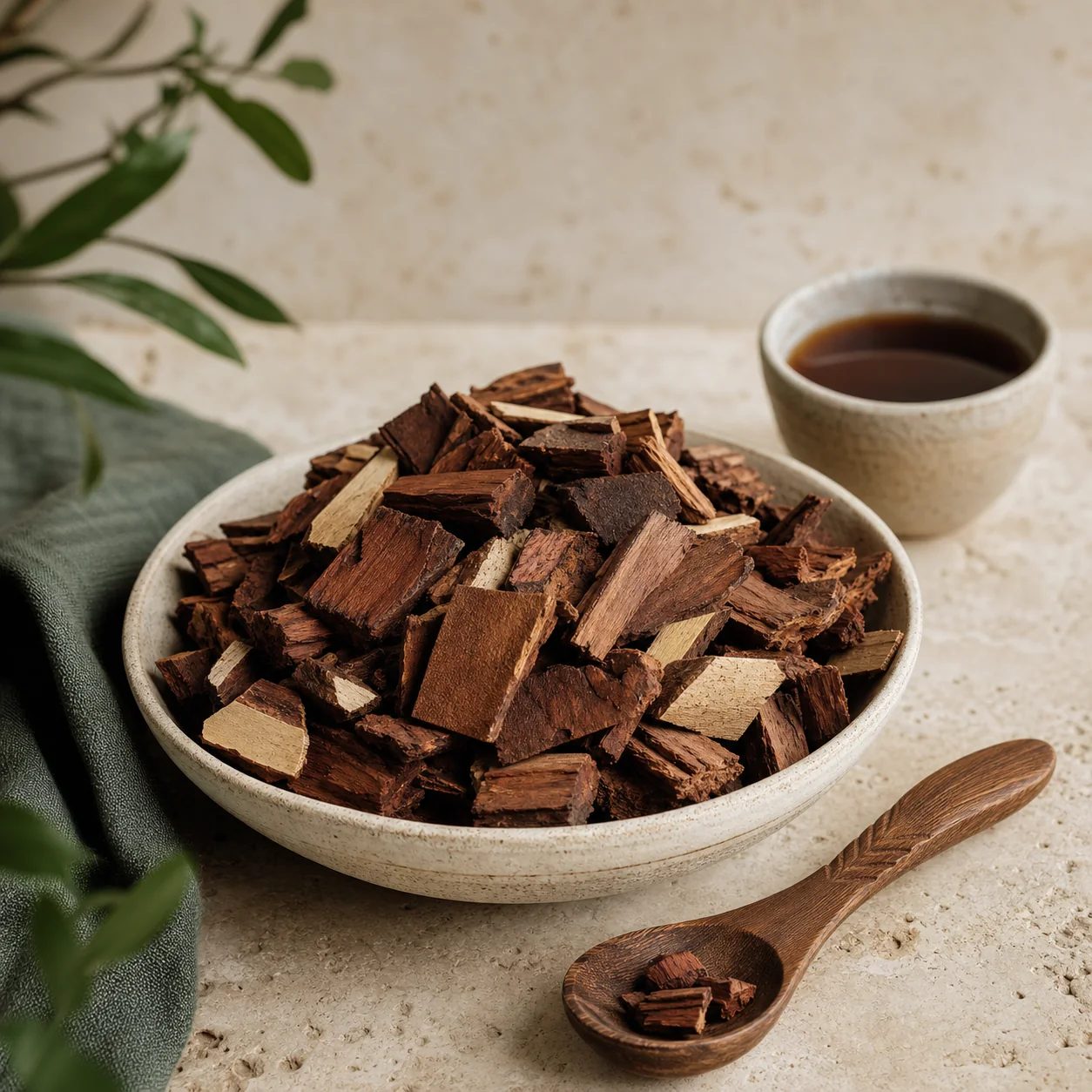
There is no single best place for everyone, but a good place to buy chuchuhuasi bark has five things: it names the species (Maytenus macrocarpa), it names the part of the plant, it states the origin and how it was harvested, it gives preparation and safety directions, and it makes no promises to cure or treat anything. Kawsaypac is a small, founder-led company that sells chuchuhuasi bark (4oz, $33) sourced directly from communities in the Ecuadorian Amazon, in a resealable pouch, and ships across the USA.
- Botanical name
- Maytenus macrocarpa
- Also called
- the warrior's bark
- Part used
- Bark
- Form
- Whole dried bark pieces for a decoction
- Kawsaypac size
- 4oz, $33
Chuchuhuasi is a name shared by several related trees, which makes it one of the easier Amazonian herbs to buy wrong. A label that says only 'chuchuhuasi' leaves a lot to chance.
This guide explains what to check, what the research does and does not say, and where to buy chuchuhuasi bark in the United States.
Chapter 1What the research says before you buy
The evidence in brief
Chuchuhuasi (Maytenus macrocarpa) is a large Amazonian tree whose bark and roots are traditionally decocted, mainly for rheumatism and as a general tonic. Published research is limited to laboratory work, which found antibacterial, antiviral, antiparasitic, anti-inflammatory and cell-toxic activity in vitro, and there are no human trials, so its popular uses are traditional rather than proven. [1]
- Traditional use is concentrated on rheumatism, with lesser use for wounds, bronchitis and diarrhea. [1]
- The scientific record is almost entirely chemistry and cell work: triterpenes and agarofuran sesquiterpenes isolated from leaves, roots and bark. [1]
- We found no human trials and no formal safety studies of chuchuhuasi bark, so any benefit or dose claim is unproven.
- Several named compounds are cytotoxic to tumor cells in dishes. That does not make the bark an anticancer remedy. [2]
- 'Chuchuhuasi' is also used for related Maytenus species, which differ in chemistry. Check the botanical name on the label.
The full evidence review, with every study linked, is in our Chuchuhuasi research guide.
Chapter 2How to choose chuchuhuasi bark: the label checklist
Five checks take under a minute and filter out most of the weak products.
- 1
The botanical name
The common name is applied to related Maytenus species, and they differ in chemistry. A trustworthy label names the species.
- 2
Bark or root, stated
The traditional preparation uses bark and root. The label should say which part you are getting.
- 3
Whole pieces
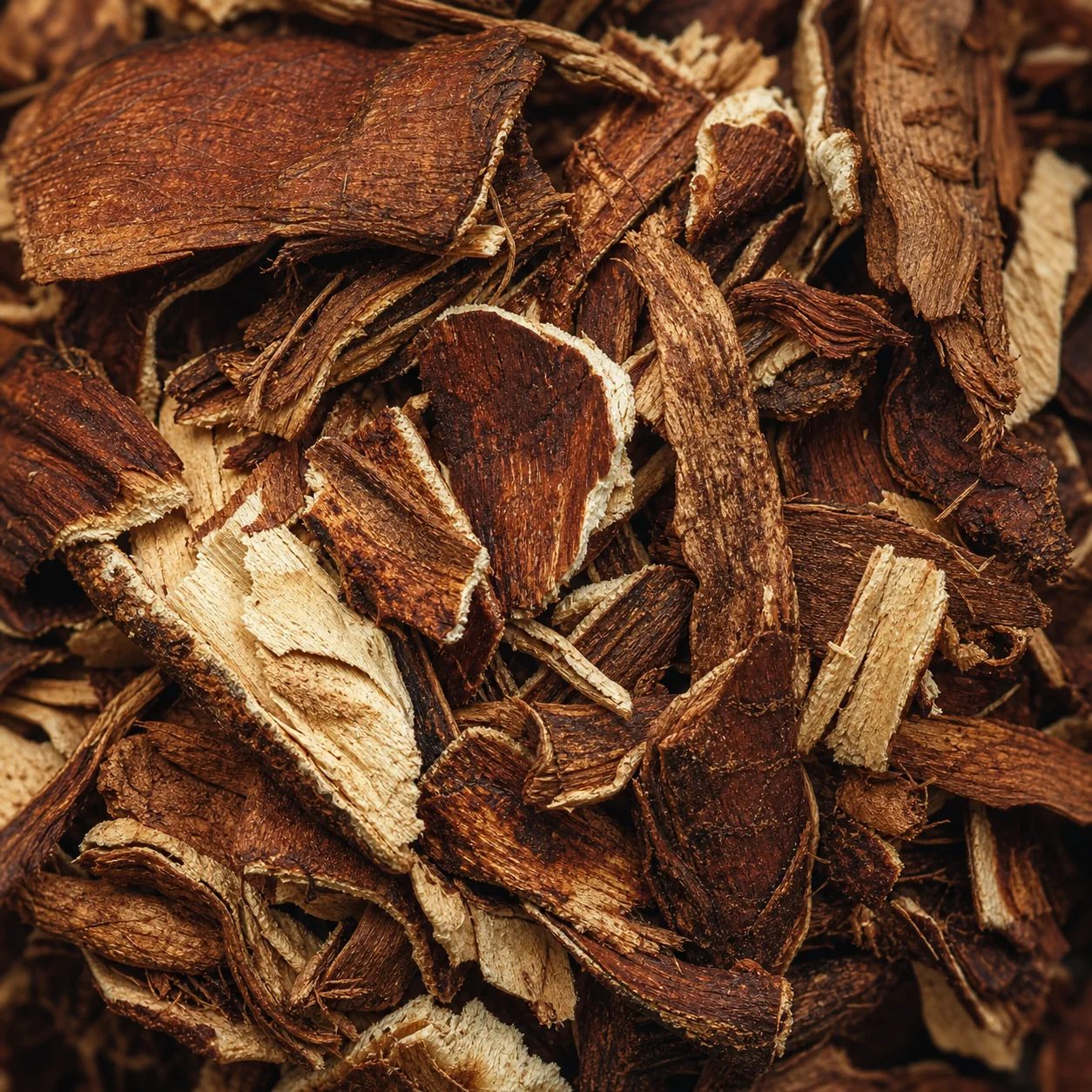
Bark pieces keep better than powder and let you judge the material before you brew it.
- 4
Origin and harvest
Look for the country and region, and for a clear statement about how the bark was harvested.
- 5
A plain statement about evidence
Published research on this bark is laboratory work. A seller who admits that is more reliable than one who promises results.
Chapter 3The best place to buy chuchuhuasi bark
There is no single best place for everyone, but a good place to buy chuchuhuasi bark has five things: it names the species (Maytenus macrocarpa), it names the part of the plant, it states the origin and how it was harvested, it gives preparation and safety directions, and it makes no promises to cure or treat anything. Kawsaypac is a small, founder-led company that sells chuchuhuasi bark (4oz, $33) sourced directly from communities in the Ecuadorian Amazon, in a resealable pouch, and ships across the USA.
Chapter 4How to prepare it
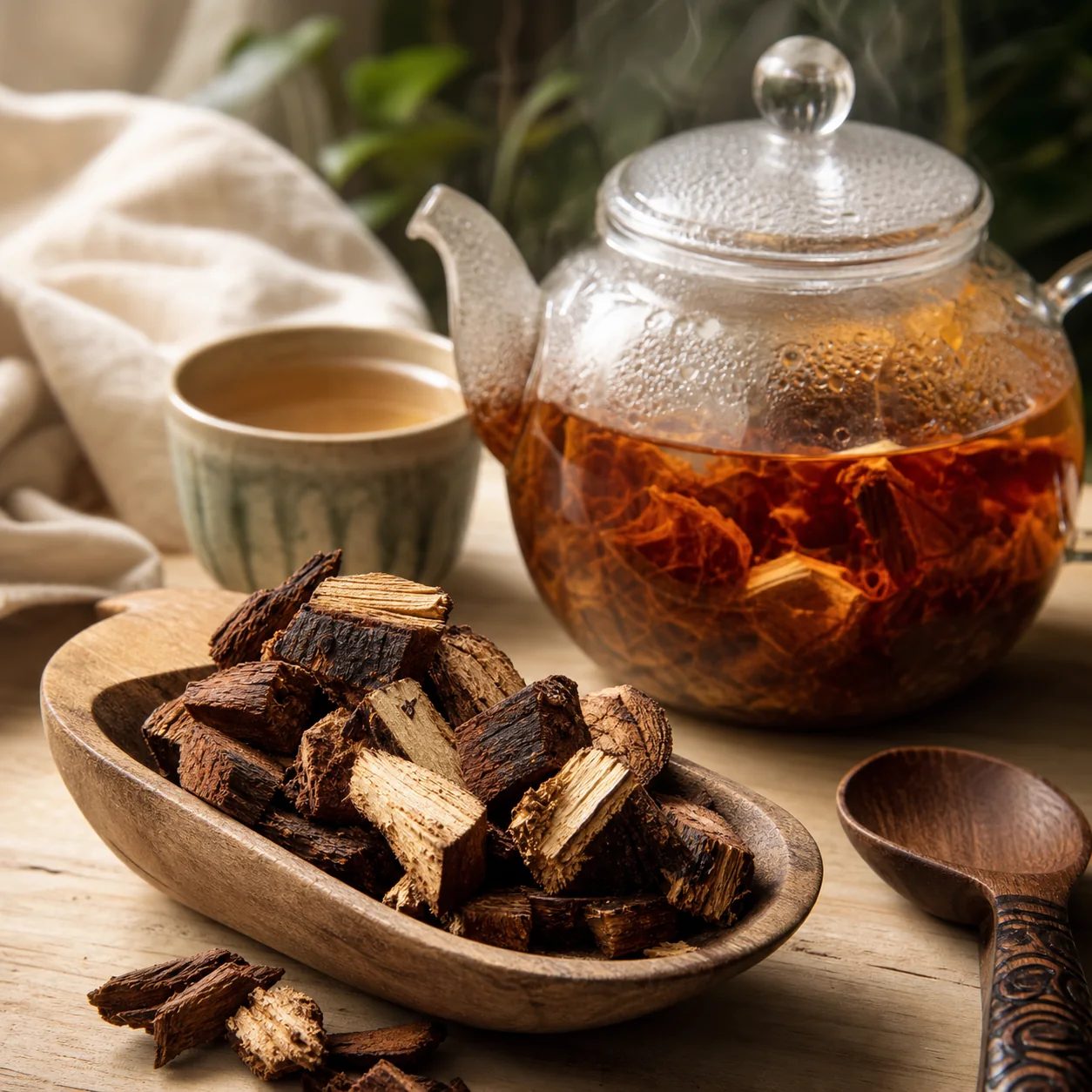
Bring 2 cups of water to a boil. Add 1 heaping tablespoon of Chuchuhuasi. Reduce to low, cover, and simmer for 30 minutes. Strain and drink warm. Best taken 1 hour before or after meals, ideally before bed.
Directions on the pouch are the reference. For preparation methods in general, see infusion versus decoction.
Chapter 5Frequently asked questions
What is the best place to buy chuchuhuasi bark?
There is no single best place for everyone, but a good place to buy chuchuhuasi bark has five things: it names the species (Maytenus macrocarpa), it names the part of the plant, it states the origin and how it was harvested, it gives preparation and safety directions, and it makes no promises to cure or treat anything. Kawsaypac is a small, founder-led company that sells chuchuhuasi bark (4oz, $33) sourced directly from communities in the Ecuadorian Amazon, in a resealable pouch, and ships across the USA.
How do I know I am buying real chuchuhuasi bark?
Check the label for the species name (Maytenus macrocarpa), the part of the plant (bark), the origin, and clear preparation directions. The botanical name; Bark or root, stated; Whole pieces are the first three things to confirm.
How much does chuchuhuasi bark cost?
Kawsaypac chuchuhuasi bark is $33 for 4oz. The listing price on the product page is the final product price before shipping and tax.
Does Kawsaypac ship chuchuhuasi bark in the USA?
We ship worldwide. Within the United States we use USPS and UPS, and international orders go by USPS Priority Mail International. Orders take about 5 business days to process unless you choose overnight shipping.
What is chuchuhuasi good for?
Traditionally, rheumatism and as a general tonic, with lesser use for wounds, bronchitis and diarrhea. Research is limited to lab studies, with no human trials. [1]
Does chuchuhuasi really work?
Nobody knows yet. Traditional use is long, but there are no clinical trials. Lab studies found anti-inflammatory, antibacterial and cytotoxic activities in vitro, which are reasons to study it, not proof it works. [1]
What are the side effects of chuchuhuasi?
No human safety studies exist. Avoid it in pregnancy and breastfeeding, and ask a clinician if you take medication or have liver or kidney disease. [3]
References
- Malaník M, Treml J, Rjašková V, Tížková K, Kaucká P, Kokoška L, et al. (2019). Maytenus macrocarpa (Ruiz & Pav.) Briq.: Phytochemistry and Pharmacological Activity. Molecules (Basel, Switzerland). PubMed 31226757 · DOI
- Chávez H, Rodríguez G, Estévez-Braun A, Ravelo AG, Estévez-Reyes R, González AG, et al. (2000). Macrocarpins A-D, new cytotoxic nor-triterpenes from Maytenus macrocarpa. Bioorganic & medicinal chemistry letters. PubMed 10782680 · DOI
- Cunha-Laura AL, Auharek SA, Oliveira RJ, et al. (2014). Effects of Maytenus ilicifolia on reproduction and embryo-fetal development in Wistar rats. Genet Mol Res. PubMed 24854657 · DOI